


Patrol robots have emerged as a revolutionary force in the security and surveillance industry, offering a blend of advanced technology and operational efficiency. As a leading provider of patrol robots, we understand the significance of how these machines interact with humans. This interaction is crucial not only for the effective deployment of the robots but also for ensuring the safety and security of the human operators and the general public.
Formal Interaction Scenarios
Initial Setup and Training
When a new patrol robot is introduced to a facility, the first interaction between the robot and humans typically occurs during the setup and training phase. Our technicians work closely with the client's security personnel or managers to install the robot, configure its settings, and provide training on how to operate it. This is a highly structured and formal interaction, where clear instructions are given, and technical knowledge is transferred.
For example, when installing an Outdoor Security Robot, our technicians will explain how to set the patrol routes, adjust the camera angles, and integrate the robot with the existing security systems. The training sessions usually cover topics such as software operation, emergency procedures, and maintenance guidelines. This ensures that the human operators are well - equipped to manage the robot effectively and can handle any issues that may arise.
Routine Monitoring and Control
Once the patrol robot is operational, regular monitoring and control become the norm. Security personnel use control centers or mobile applications to oversee the robot's activities. They can view the live video feeds from the robot's cameras, check its status, and even issue commands remotely.

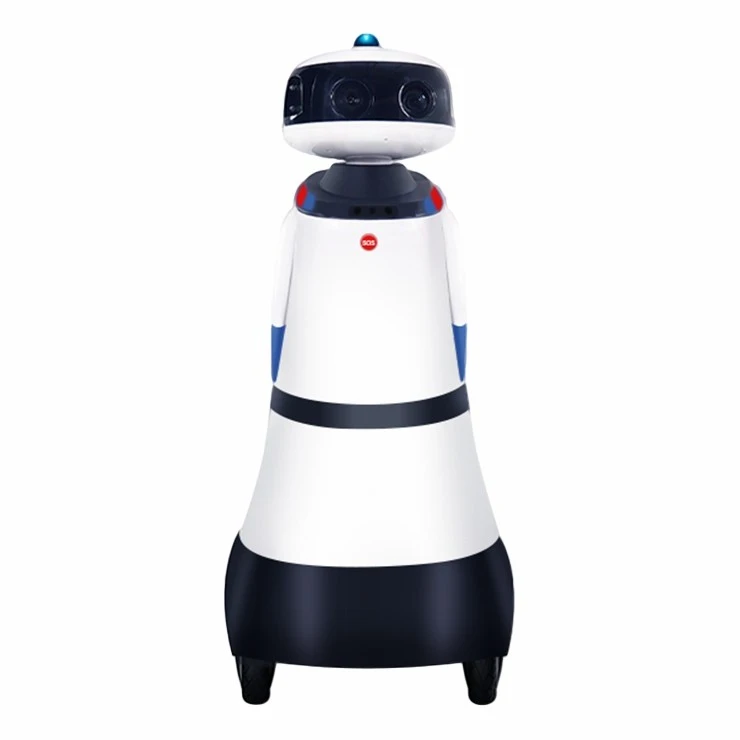
For instance, a Night Vision Patrolling Robot is usually programmed to follow a pre - defined route during the night. However, if the security personnel notice any suspicious activity on the live feed, they can send a command to the robot to investigate the area further. This interaction is based on a formalized communication protocol, where both the robot and the human operator follow specific rules and procedures.
Incident Response
In the event of an incident, such as a security breach or an emergency situation, the interaction between the patrol robot and humans becomes more critical. The robot is designed to detect and report incidents automatically. It can send alerts to the security personnel, along with relevant information such as the location of the incident and a live video stream.
For example, if a Security Robot Commercial detects unauthorized access to a restricted area, it will immediately send an alert to the control center. The security personnel can then assess the situation and decide on the appropriate response. They may send the robot to intercept the intruder, or they may coordinate with other security resources on - site.
Informal Interaction Scenarios
Public Engagement
In some cases, patrol robots are deployed in public areas such as shopping malls, parks, or airports. In these environments, the robots may have informal interactions with the general public. People may be curious about the robot and want to learn more about its functions.
Our robots are designed to be approachable and friendly. They can display simple messages on their screens, such as greetings or safety instructions. For example, a Night Patrol Robot in a park may display a message saying "Have a safe night! We're here to protect you." This helps to build a positive perception of the robot among the public and can also enhance the overall security atmosphere.
Workers in the Area
In industrial or commercial settings, the patrol robots may interact with the workers on a daily basis. The robots are programmed to move around the premises without causing disruption. However, they may need to navigate through areas where workers are present.
For example, in a warehouse, the Security Patrol Robot will use its sensors to detect the presence of workers and avoid collisions. In some cases, the workers may also provide feedback to the security personnel about the robot's movement patterns or its performance. This informal interaction can help to improve the robot's operation and ensure that it fits well into the existing work environment.
Challenges in Human - Robot Interaction
Communication Barriers
One of the main challenges in human - robot interaction is communication. Although our robots are equipped with advanced communication technologies, there may still be issues with understanding and interpreting human commands. For example, if the security personnel use ambiguous language when sending commands to the robot, it may lead to misinterpretation.
To address this issue, we are constantly improving the natural language processing capabilities of our robots. We are also providing clear guidelines to the operators on how to communicate effectively with the robots.
Trust and Acceptance
Another challenge is building trust and acceptance among the human users. Some people may be skeptical about using patrol robots, especially in security - sensitive areas. They may worry about the reliability of the robots or the potential for privacy violations.
To overcome this challenge, we provide extensive training and support to the users. We also conduct demonstrations to show the capabilities and benefits of our robots. Additionally, we ensure that our robots comply with all relevant privacy and security regulations.
Future of Human - Robot Interaction in Patrol Robots
As technology continues to evolve, the interaction between patrol robots and humans is expected to become more sophisticated. Future patrol robots may be able to understand and respond to human emotions, which will enhance the communication and cooperation between them.
For example, if a security personnel is under stress during an incident, the robot may be able to detect the stress level and provide appropriate support or assistance. Moreover, with the development of artificial intelligence and machine learning, the robots will be able to learn from human - robot interactions and improve their performance over time.
Conclusion
The interaction between patrol robots and humans is a complex and multi - faceted process. As a patrol robot supplier, we are committed to ensuring that our robots can interact effectively with humans in both formal and informal settings. We are constantly working on improving the technologies and design of our robots to overcome the challenges in human - robot interaction.
If you are interested in enhancing your security measures with our advanced patrol robots, we invite you to engage in a procurement discussion. Our team of experts is ready to assist you in selecting the most suitable robots for your specific needs. Together, we can create a safer and more secure environment.
References
- Anderson, R. J., & Nourbakhsh, I. R. (2007). Introduction to Autonomous Mobile Robots. MIT Press.
- Sheridan, T. B. (2018). Humans and Automation: System Design and Research Issues. MIT Press.
- Draper, J. V., Kaber, D. B., & Usher, J. M. (2004). The human-robot interaction in advanced manufacturing. Manufacturing Review, 17(2), 173 - 188.


