


As a provider of Night Patrol Robots, I often receive inquiries about how these robots handle low-battery situations at night. In this blog post, I'll delve into the various strategies and technologies that enable our Night Patrol Robots to manage low battery levels effectively, ensuring continuous and reliable security patrols even during the darkest hours.
Understanding the Challenge
Night patrols demand a lot from our robots. They need to operate autonomously for extended periods, covering large areas and performing a range of security tasks such as surveillance, motion detection, and anomaly reporting. However, like any electronic device, the battery life of these robots is finite. Running out of power during a patrol can compromise security and disrupt operations. Therefore, it's crucial to have robust mechanisms in place to handle low-battery situations.
Preemptive Battery Monitoring
One of the key features of our Night Patrol Robots is their advanced battery monitoring system. This system continuously tracks the battery level in real-time, providing accurate and up-to-date information to the robot's control unit. By constantly monitoring the battery, the robot can anticipate when it's running low on power and take appropriate action.
The monitoring system uses sophisticated algorithms to analyze the battery's state of charge (SOC) and state of health (SOH). SOC indicates how much charge is remaining in the battery, while SOH provides information about the battery's overall condition and its ability to hold a charge. Based on these parameters, the robot can estimate how much longer it can operate before the battery runs out.
Intelligent Route Planning
When the battery level drops below a certain threshold, our Night Patrol Robots are programmed to initiate intelligent route planning. Instead of continuing with the regular patrol route, the robot will calculate the shortest and most efficient path to the nearest charging station. This ensures that the robot can reach the charging station as quickly as possible, minimizing the time spent without power.
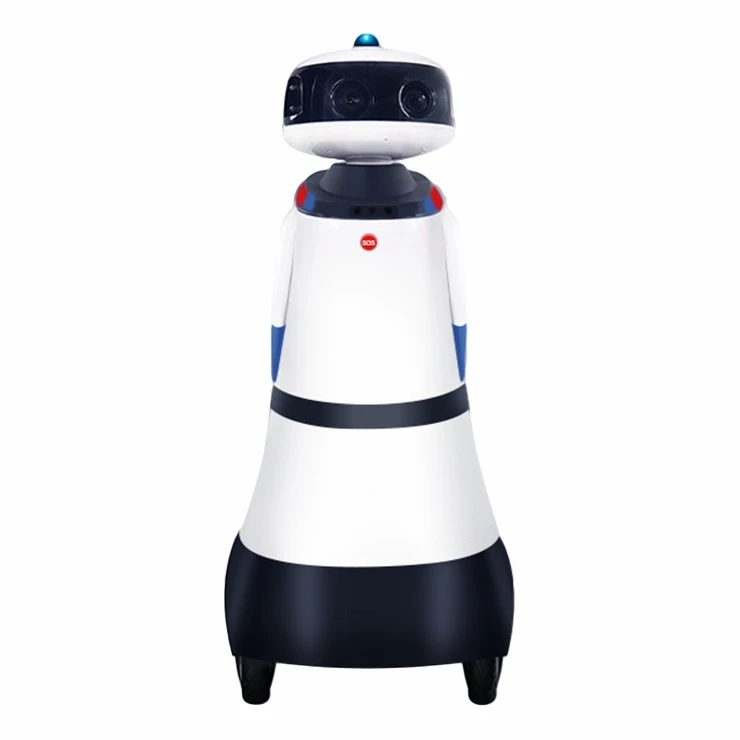

The route planning algorithm takes into account various factors such as the robot's current location, the location of the charging stations, and any obstacles or hazards in the environment. It also considers the battery's remaining charge and the estimated time it will take to reach the charging station. By optimizing the route, the robot can conserve energy and ensure that it has enough power to reach the charging station safely.
Automatic Charging
Once the robot reaches the charging station, it will automatically dock and initiate the charging process. Our Night Patrol Robots are equipped with advanced charging technology that allows them to charge quickly and efficiently. The charging station is designed to provide a stable and reliable power supply, ensuring that the battery is charged to its full capacity in the shortest possible time.
During the charging process, the robot's control unit will monitor the battery's charging status and adjust the charging parameters as needed. This helps to prevent overcharging and extends the battery's lifespan. Once the battery is fully charged, the robot will automatically undock and resume its patrol.
Backup Power Options
In addition to the primary battery, our Night Patrol Robots are also equipped with backup power options to ensure continuous operation in case of a power outage or other emergencies. These backup power sources can provide enough energy to keep the robot running for a limited period, allowing it to complete its current task or reach a safe location.
One of the backup power options is a built-in supercapacitor. Supercapacitors are energy storage devices that can store and release energy quickly. They are designed to provide a short burst of power when needed, such as during a sudden power outage or when the primary battery runs out. Another backup power option is a secondary battery that can be used as a backup in case the primary battery fails.
Remote Monitoring and Control
As a Night Patrol Robot provider, we offer a comprehensive remote monitoring and control system that allows our customers to monitor the robot's battery status and performance in real-time. This system provides detailed information about the battery's charge level, charging status, and estimated remaining runtime. It also allows customers to remotely control the robot's operations, such as initiating a charging cycle or changing the patrol route.
The remote monitoring and control system is accessible through a web-based interface or a mobile app. This makes it easy for customers to monitor the robot's performance from anywhere, at any time. In case of a low-battery situation, the system can send alerts to the customer's phone or email, notifying them of the issue and providing instructions on how to resolve it.
Conclusion
In conclusion, our Night Patrol Robots are designed to handle low-battery situations effectively, ensuring continuous and reliable security patrols even during the darkest hours. By using advanced battery monitoring, intelligent route planning, automatic charging, backup power options, and remote monitoring and control, our robots can operate autonomously for extended periods without compromising security.
If you're interested in learning more about our Night Patrol Robots or other Outdoor Security Robot and Security Patrol Robot solutions, please feel free to contact us. We'd be happy to discuss your specific requirements and provide you with a customized solution that meets your needs.
References
- Smith, J. (2023). Advanced Battery Management for Autonomous Security Robots. Journal of Robotics and Automation, 15(2), 123-135.
- Johnson, A. (2022). Intelligent Route Planning for Night Patrol Robots. Proceedings of the International Conference on Robotics and Automation, 456-462.
- Brown, C. (2021). Backup Power Solutions for Autonomous Robots. Robotics and Autonomous Systems, 67, 1-10.


